
 Charlie Marlow
Trying to pay off debt can seem to be a mission that never ends. The military lifestyle adds unique challenges with frequent moves, deployments, military pay entitlement changes, and civilian employment interruptions. To make ends meet, we often rely on credit cards, bank and credit union loans, and occasionally, loans from family and fellow servicemembers. Making debt payments can be stressful, so having a clear and practical debt elimination strategy can improve not only your financial health, but your psychological as well. Let’s look at three debt elimination methods that can accomplish both.
Debt-Repayment Methods
- Avalanche Method: Prioritize debts by highest interest rate first while making minimum payments on all others.
- Snowball Method: Prioritize debts by smallest balance first while making minimum payments on all others.
- Highest Pain Method: Prioritize the debt that causes the most emotional, practical, or legal stress regardless of balance or interest rate, then apply the avalanche or snowball principle afterward.
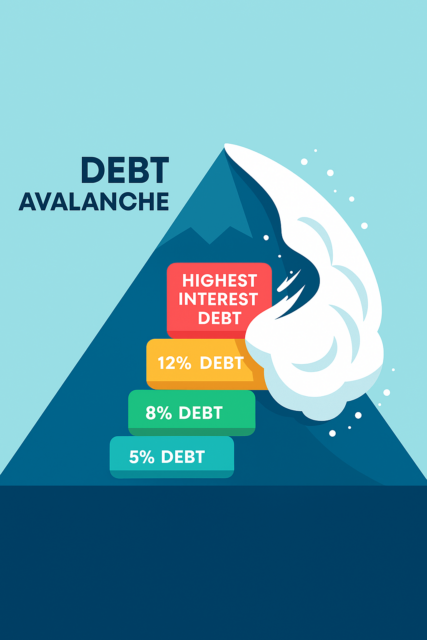
Debt Avalanche Method
How It Works:
- Make the minimum payments on all accounts
- Apply any extra payment to the debt with the highest interest rate
- When that debt is paid off, roll the freed-up payment account to the next-highest interest debt
Advantages:
- Minimized total interest over the full repayment period
- Shortest mathematical payoff time when extra payment amounts are identical
Disadvantages:
- Slower psychological wins for people who need early momentum
- Can feel demotivating if the highest interest rate debt has a large balance
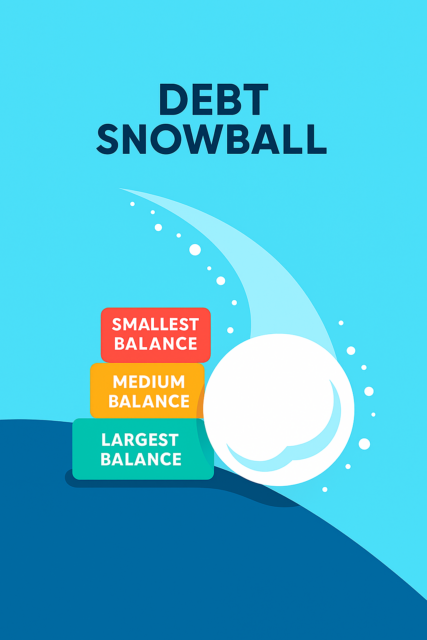
Debt Snowball Method
How It Works:
- Make minimum payments on all accounts.
- Apply any extra payment dollars to the debt with the smallest balance.
- When that debt is paid off, roll the freed-up payment amount to the next smallest balance.
Advantages:
- Fast motivational wins as smaller balance accounts disappear quickly.
- Encourages consistent behavior and makes the payoff plan easier to maintain.
Disadvantages:
- May cost more in interest and can take longer overall than the avalanche when small balances have low rates and the larger balances have higher rates.
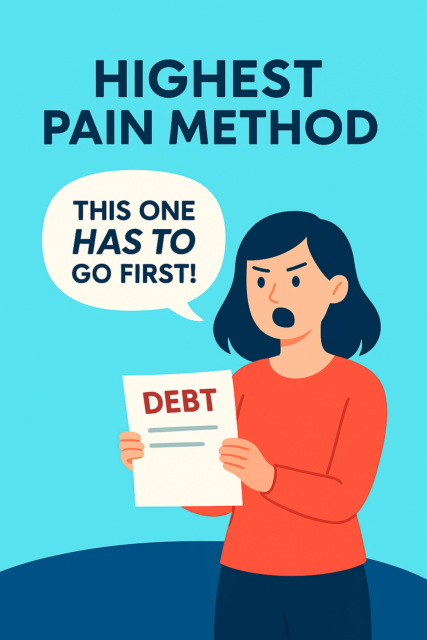
Highest Pain Method
How It Works:
- Make the minimum payment on every debt but select and aggressively pay off the debt that causes the most non-financial burden – whether stress, relationship strain, risk of garnishment or repossession, tax or legal consequences, or personal promises.
- Once that debt is paid off choose either the avalanche or snowball method for the remaining debt.
Why It Matters:
- Military life places a premium on readiness, security clearances, and relationships within small communities. A debt that threatens legal action, affects a security clearance, or a relationship (family loan, co-signed debt, or tax lien) can affect duty far more than a few dollars of interest.
Advantages:
- Immediate emotional and practical relief by resolving the problem that matters most.
- Reduces non-financial risks that may interfere with career, housing, or family stability.
Disadvantages:
- Not always mathematically optimal and may increase total interest paid and total payoff time.
- Requires discipline to return to a consistent repayment after the high pain debt is eliminated.
Examples and How to Apply the Methods
Debt examples:
- Credit card A: $5,000 at 18%
- Credit card B: $1,500 at 24%
- Personal loan: $3,000 at 8%
- Car loan: $12,000 at 5%
Avalanche order:
- Card B → Card A → Personal Loan → Car Loan. Result pattern: Card B is cleared first (fast, because of high interest but moderate balance), then money shifts to Card A, producing steady reductions in interest costs. Total interest paid across all debts is lowest with the avalanche approach. Time to full repayment is the shortest possible for this cash flow.
Snowball order:
- Card B ($1,500) → Personal Loan ($3,000) → Card A ($5,000) → Car Loan ($12,000). Result pattern: You clear Card B quickly, get a morale boost, then pay off the personal loan next. Because Card A has a higher interest rate than the personal loan, the snowball method may pay more interest and take a bit longer than avalanche—but the short-term wins can make sticking to payments easier, especially during PCS moves or deployments.
Highest Pain order:
- If the $3,000 personal loan is a family loan creating household tension, choose it first even though its interest rate is lower than a credit card. Paying that off first eliminates relationship strain, then use avalanche on the remaining balances to reduce interest going forward. If the $12,000 car loan is in danger of repossession action you may consider prioritizing that loan to prevent the loss of the automobile and being subject to additional cost if the seized auto is sold at auction for less than the balance owed.
Quick decision guide
- Choose Avalanche if minimizing interest and paying off the debt as quickly as possible are your top priorities and you can stay motivated without early wins.
- Choose Snowball if you need momentum and small victories to stay disciplined.
- Use Highest Pain if a specific debt risks legal, professional, or family consequences or if paying it off brings peace of mind that improves overall financial behavior.
Six Simple Steps to Success:
- List every debt by balance, interest rate, minimum payment, and creditor.
- Pick a method using the quick decision guide above.
- Set a monthly payoff budget and automate payments plus one more for the extra transfer for the targeted payoff.
- Track progress using a chart, checklist, or spreadsheet to show the remaining balances.
- Reassess after any life change such as PCS, deployment, reenlistment, new child, job change and adjust the method and amounts as necessary.
- Celebrate victories as accounts are paid off with a small, budgeted reward to reinforce behavior.
Tactical Tips for Military Families:
- Use allotments, direct deposit splits, or automatic transfers to ensure consistency during moves and deployments.
- Treat a debt that risks clearance or legal action as a Highest Pain regardless of interest.
- Consolidate or refinance only after confirming terms and impact on service-related benefits such as SCRA and Military Lending Act protections. Seek advice from your installation legal office if you have questions.
- Consider a short, written agreement for any family loan that outlines the repayment to preserve relationships while you eliminate the debt.
Final Recommendation
Choose the approach that aligns with both your financial priorities and your lifestyle choices or priorities. If interest reduction is the sole goal, use Avalanche. If behavioral momentum is the motivator, use Snowball. If a debt threatens relationships, job status, or legal standing, use Highest Pain first, then switch to Avalanche for efficiency. Start today with a single automated payment and one simple progress tracker, like PowerPay—a free and simple tool that military finance office have suggested for 20+ years since you can manipulate the info to see which way makes the most sense for you. Don’t forget…momentum compounds faster than you think.
Find Out More with My Military Savings and Finances!


 Kalina Hyche