 Kevin Findley
In 1942, WWII was barely underway, and the outlook was, for a short time, bleak. The recent Battle of the Coral Sea ended in a stalemate that was crushing to both the American and Japanese Navies. One of the concerns was keeping communications secure, as the Japanese code breakers proved to be quite talented.
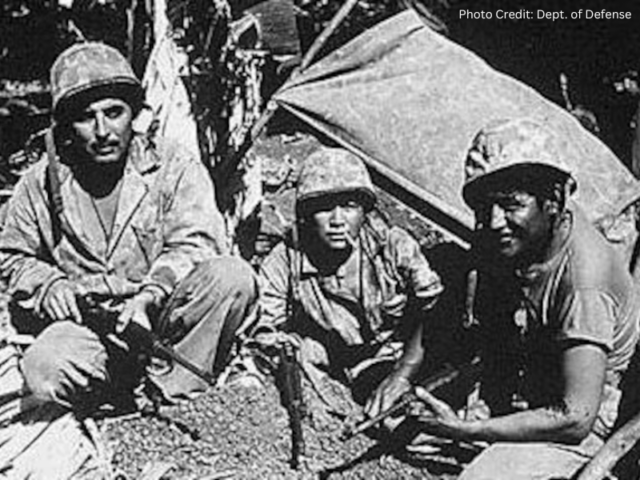
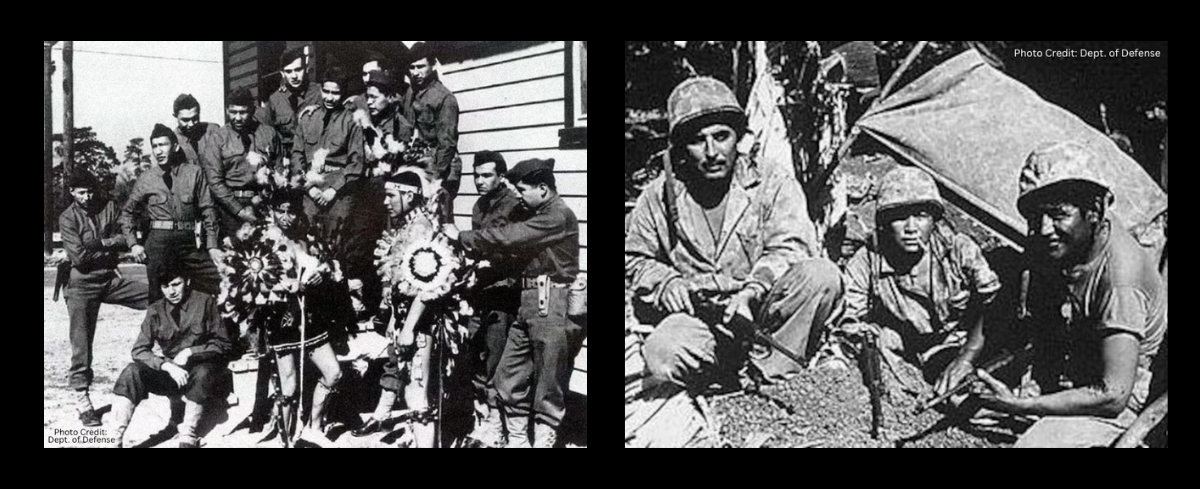
Fortunately, a WWI veteran, Philip Johnston, had a solution. As a boy, he lived within the Navajo Nation with his missionary parents and became fluent in the language. After reading about efforts to create an unbreakable code, Johnston was convinced the solution was with the Navajo people.
The Marines agreed and established a training unit in San Diego. Twenty-nine Navajo men were the first volunteers and, with Johnston, quickly developed the code. They used a combination of their language and keyword substitutions that bedeviled the Japanese for the next three years. By the end of the war, about four hundred Navajos volunteered for this duty.
Beginning with the Battle of Guadalcanal in August of that year, the Navajo Code Talkers were a part of every significant encounter with the enemy, until the end of the war. Their success is legendary within the Marine Corps and an incredible source of pride for Navajo service members and veterans still today.
It would be twenty-three years after the end of the war before these men could even tell their story, however. Their existence and mission were not declassified until 1968. It would still take another fourteen years for Federal recognition to begin.
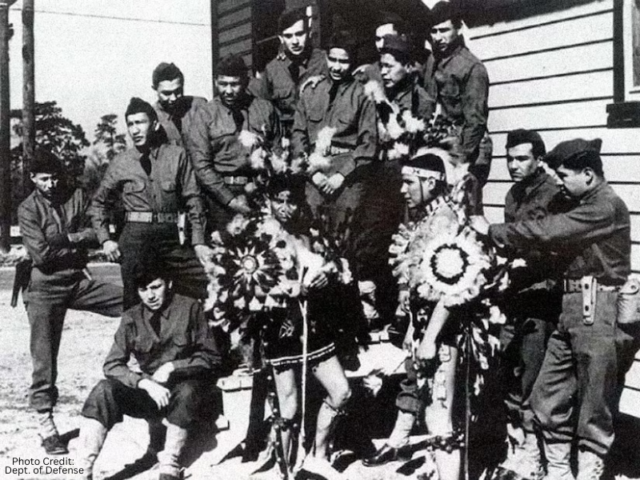
In 1982, President Reagan awarded a Certificate of Recognition to the Navajo Code Talkers and declared August 14th to be ‘Navajo Code Talkers Day’. President Clinton, in 2000, went one step further and signed the law that awarded them the Congressional Gold Medal. The following year, President Bush presented the medals to the last four survivors in July 2001.
Today, eighty years after WWII ended, there are only two Code Talkers still with us. Thanks to the efforts of military and civilian historians and reporters at local and national levels, there are written, audio, and video interviews available with many of them before they passed. As we observe this day, take the time to find them and discover an amazing part of military history that was instrumental to defeating the Japanese and achieving victory in the Pacific Theater.
Find Out More with MyMilitarySavings.com and Military Life & Family!

 Peter Jang
 Queen W.