
 Charlie Marlow
Identity theft isn’t just a civilian problem. Service members, especially those who move frequently, deploy, or spend long stretches away from home, face unique risks. One of the strongest tools you have to protect yourself is a credit freeze, but what exactly is it, and should you use it?
Let’s break it down in a way that fits the realities of military life.
What Is a Credit Freeze?
- A credit freeze (also called a security freeze) is a free tool that restricts access to your credit report. When your credit is frozen, lenders can’t pull your credit file, meaning no one can open a new credit account in your name, even if they have your personal information.
- You can still use your existing credit cards and accounts normally. A freeze only blocks new credit from being opened.
Why Consider Freezing Your Credit?
- Military families face several identity‑theft risks that civilians don’t:
- Frequent PCS moves increase the number of organizations handling your personal information.
- Deployments make it harder to monitor accounts regularly.
- Living overseas can expose your data to unfamiliar systems or scams.
- Military records are high‑value targets for cybercriminals.
- A credit freeze is one of the most effective ways to shut down unauthorized credit activity.
Advantages of Freezing Your Credit
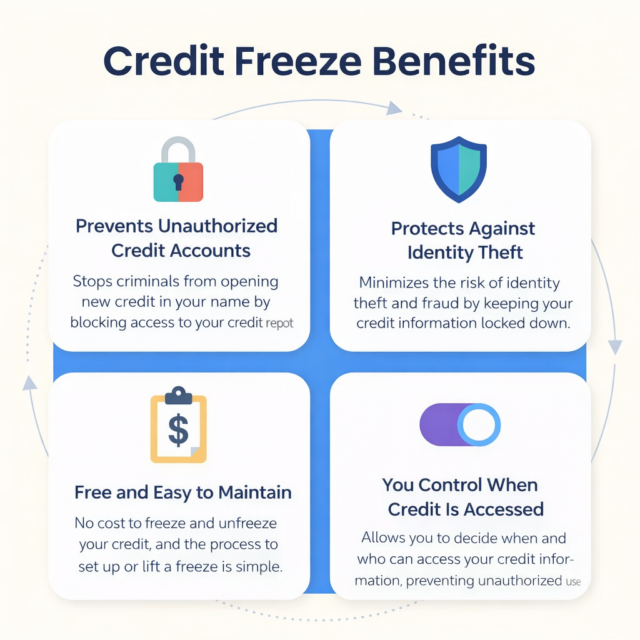
- Strong Protection Against Identity Theft – A credit freeze blocks criminals from opening loans, credit cards, or accounts in your name, even if they have your Social Security number or other personal information.
- It’s Free – Federal law requires all three major credit bureaus to offer freezes at no cost.
- It Doesn’t Affect Your Credit Score – Freezing your credit will not change your credit score up or down. Payment history, credit utilization, length of credit history, recent credit applications, and your credit mix determine your credit score.
- You Can Lift It Anytime – If you need to apply for a loan, you can temporarily “thaw” your credit online or by phone.
Disadvantages (and How to Manage Them)
- You Must Unfreeze Before Applying for Credit – If you’re buying a car, applying for a mortgage, or opening a new credit card, you’ll need to lift the freeze. This is usually quick—often just minutes—but requires planning.
- You Must Freeze/Unfreeze with All Three Bureaus – A complete freeze means contacting:
- Equifax
- Experian
- TransUnion
- You Need to Keep Track of Your PINs or Login Credentials – Losing access can delay your ability to lift a freeze when needed.
When Should a Service Member Freeze Their Credit?
- A credit freeze is especially useful during:
- Deployments – If you’ll be away from home and unable to monitor your accounts regularly, freezing your credit is one of the simplest ways to protect yourself.
- PCS Moves – Each move increases the number of offices, landlords, and agencies handling your personal data. A freeze reduces the risk of misuse.
- Extended Overseas Assignments – Foreign networks and systems may not have the same security standards as U.S. institutions.
- After Any Data Breach – If your information was exposed—whether through a government breach, a retailer, or a financial institution—a freeze is a smart next step.

How to Freeze Your Credit (Step-by-Step)
You must contact each credit bureau individually. The process is free and takes about 10–15 minutes per bureau.
- Equifax
- Visit the Equifax freeze page
- Create or log in to your account
- Verify your identity
- Apply the freeze
- Experian
- Visit the Experian freeze page
- Follow the identity verification steps
- Freeze your credit
- TransUnion
- Visit the TransUnion freeze page
- Create an account
- Freeze your credit
You’ll receive confirmation and instructions for lifting the freeze later.
Special Considerations for Military Personnel
- Active-Duty Alerts Are Available – Service members can place a free, one‑year active‑duty fraud alert. This requires businesses to take extra steps to verify your identity before issuing credit.
- A fraud alert is helpful, but a credit freeze is stronger.
- Overseas Phone Numbers May Not Work – Some credit bureaus require U.S.-based phone numbers for verification. If you’re stationed overseas:
- Use a U.S. phone number (Google Voice, VOIP, or a U.S. line on your plan)
- Set up your online accounts before leaving the country
- Power of Attorney (POA)
- If you’re deployed, consider giving a trusted spouse or family member POA so they can:
- Freeze or unfreeze your credit
- Handle financial matters on your behalf
- If you’re deployed, consider giving a trusted spouse or family member POA so they can:
- Keep Your Login Credentials Secure
- Store your credit bureau login information in:
- A secure password manager
- A sealed envelope in a home safe
- A secure digital vault
- This is especially important if you’re deployed or moving frequently.
- Store your credit bureau login information in:
- Children’s Credit Freezes – Military families often move frequently, and children’s Social Security numbers can be vulnerable. You can freeze your child’s credit for free with all three bureaus.
Should You Freeze Your Credit?
- For most service members and military families, the answer is yes.
- A credit freeze is:
- Free
- Fast
- Reversible
- Highly effective
- If you’re deploying, PCSing, or living overseas, a freeze gives you peace of mind and reduces the risk of financial chaos waiting for you back home.
Military life comes with enough challenges—identity theft shouldn’t be one of them. A credit freeze is one of the simplest, strongest ways to protect your financial future, especially when your lifestyle makes you a bigger target.
Find Out More with My Military Savings and Finances!


 Jeanine McKelvy



Add comment